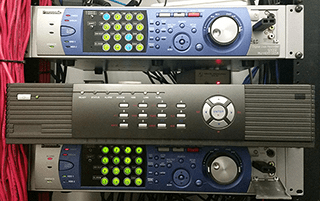
Digital video recording has come a long way in the past 40 years. The earliest digital video recorders stored footage on cassette tapes and offered limited ability to analyze or clarify the video. As technology advanced, both camera resolution and storage media quality improved significantly.
In 1995, Tektronix introduced the PDR100 Video Disk Recorder, which was among the first to record and play back video stored on hard drives using motion JPEG (also known as MPEG) files. Since then, video file formats have continued to evolve, improving in quality and compression. Today, most DVRs utilize MPEG-4, H.264, and more recently, H.265 compression standards.
However, as video quality has improved, so too has the demand for storage capacity. To manage this, DVRs offer various settings to help reduce file size and storage needs. These include adjustments to image resolution, frame rate, frame size, compression codecs, and motion detection features.
Exporting Video Footage
As DVRs have advanced, so have the methods for exporting video footage. In the early 2000s, many DVRs exported raw video files that could only be played back using proprietary software. Some systems even re-compressed the video during the export process, potentially degrading quality. Today, there are almost as many export formats and processes as there are DVR systems, making it critical for users to understand their specific system. As a certified video technician and analyst, I have exported surveillance footage from hundreds of DVR and NVR (Network Video Recorder) systems, and no two systems are exactly alike.
The Role of Surveillance in Business Security
In today’s world, video surveillance is essential for protecting businesses from criminal activity. Over the past five years, the use of CCTV, DVRs, and NVRs in commercial settings has grown substantially. In fact, nearly 80% of businesses now have some form of video surveillance installed.
Unfortunately, many of these systems are not properly configured or maintained. Cameras may not be positioned to capture critical areas, or system settings may not be optimized for high-quality recording. Without regular maintenance, the video footage captured may be of poor quality and ultimately unusable in criminal investigations.
Surveillance at Home
As digital surveillance systems have become more affordable, they are increasingly used in homes to provide security and peace of mind. Home systems have grown in both complexity and scale, often involving multiple DVRs and a large number of cameras. Exporting high-quality footage from these systems requires the expertise of a trained and certified technician, especially when video may be needed for legal or investigative purposes.
Below is an example of just one location that had multiple DVRs and cameras being recorded. It takes a qualified technician to be able to export out the video it is best quality that the system is capable of exporting.